
The rise of the killer robots

I'm really lucky to be at TED Global in Edinburgh this week. (It's a tough job, but someone had to do it...)
And I've just seen one of the scariest talks *ever*.
As part of a session of talks about drone tech, the sci-fi author Daniel Suarez spoke about lethal autonomy - or, robots that can decide to kill humans on their own, without referring to humans at all.
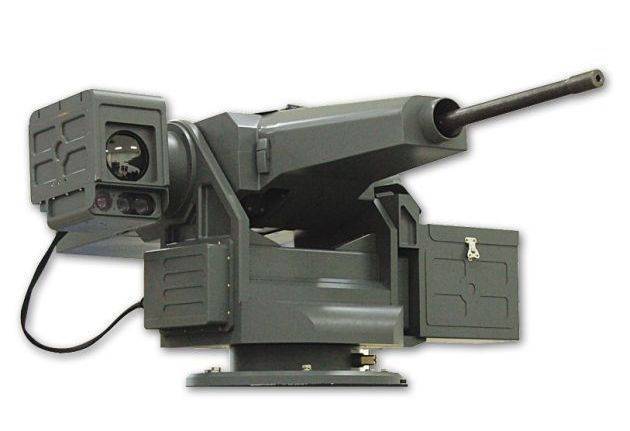
Mr Suarez is a science fiction writer, but he kicked things off by telling us that this shit is no longer science-fiction. The weapon below is an automatic gun currently deployed in the demilitarised zone between North and South Korea that can kill from several kilometres - that doesn't *need* humans to be involved in decision-making.
Humans are still in the loop, but no longer a technical requirement
Maybe you saw this video from February this year, presenting a range of 'Micro Air Vehicles' that the US military is working on (or read this article in The Economist this month). Towards the end of the video one of them creeps up and 'slots' a terrorist (a guy with a gun) right in the brain. It's chilling.
Apparently, 70 nations are currently developing remotely piloted drones, which might be considered the "pre-cursors to autonomous robotic weapons". Although a US government directive currently prevents the final decision to kill from being made by robots, Daniel Suarez describes a situation already somewhat slightly out of control.
With 300,000 hours of video provided by US drone strikes in 2011 alone (and poised to grow exponentially), there is a danger that humans will not physically be able to review the information - leaving it to image analysis software to help: and thereby handing the responsibility of what humans look at to the robots.
Now, I know that Daniel is a fiction writer and some of this stuff seems far-fetched and hackneyed - like, it's a super-trope: robots-are-going-to-malfunction-and-try-and-kill-us.
I couldn't help thinking about that Postman Pat episode of where a couple of robots go mental and wreck a postal sorting office. And I also reach for this, from David Shrigley: 'Robots versus Armour'.
Nevertheless, Daniel's arguments (peppered through with phrases like 'killer robots' and 'robotic weaponry') remain hard to brush aside with the normal insouciance. Global militaries are tooling up - they can't get enough of this stuff, and there is undeniably a huge proliferation of cheaper, smarter, increasingly lethal technology that makes it more likely that terrorists will adopt it too. We can't un-invent this stuff.
Daniel thinks we should adopt:
A universal ban on the development and deployment of killer robotics
And he gives us humans 10 years before "it's too late". But then, he also said at one stage (during the following discussion at Skype's TED Global Translators session):
Haven't these people seen [the film] Terminator?
Robotics has come a long way since the heady days of the 1980s. By the end of this you may want robots to be able to murder at will: