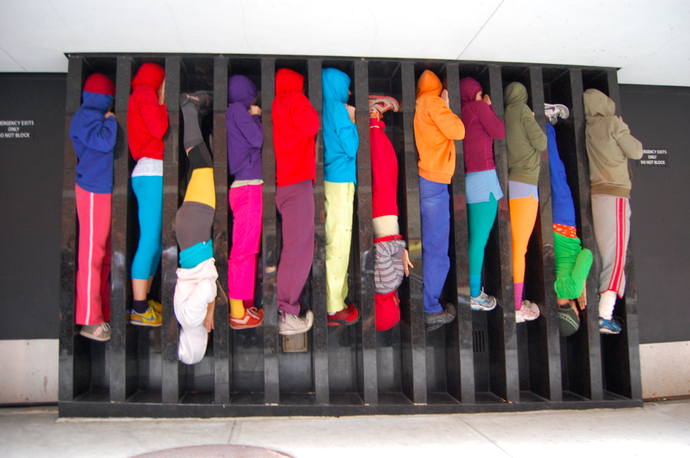
Gaps (formerly known as 'hackable spaces', a term coined by @conordelahunty) have been cropping up all over the place this week. It started with Ian's excellent post on designing connected products and then suddenly, I was seeing gaps everywhere.
Creative Commons photo credit: 16 Miles of String on Flickr
A Loja Vizia / The Empty Shop is a smart approach to charitable donations started in the VillaLobos shopping centre in São Paulo. In a supercity where the gap between the über-wealthy and the have-nothings is unassailable, it seems there's a need to rebrand the act of charitable giving as transparent yet showy. The store's creators have made the shop unit from glass and clear perspex to encourage donors to give only clothes in good condition, which are styled daily on shop dummies. At the end of each day, the store is emptied, ready for fresh donations in the morning. The gap, or allure of empty space, is what encourages people to fill it with donations.
I've never been to São Paulo, but another big gap which caught my attention years ago on Flickr, was the No Logo series by Tony de Marco. Gilberto Kassab, São Paulo's erstwhile mayor, enforced a Clean City Law which 'came from a need to combat pollution' and amongst other things banned all billboards because they were cluttering up the city's skyline. For all I know, they might have been obscuring the eyeline of the super-rich's helicopter pilots... but the visual effect of the gaps was compelling. The gaps, framed by the skeletons of billboards, seemed to encourage breathing space and a more creative view of the sky. Like, actual blue sky thinking, yeh.
And yet, The Verge writer
Paul Miller's experience of quitting the internet for a year tells me that the fact of creating gaps by unplugging doesn't necessarily enable greater clarity or calm. He had been connected to the internet (24/7/365) for the majority of the past 15 years and decided he was on a hamster wheel of endless email, IM and stuff to do that he just had to step away from. After the initial euphoria and sense of freedom, he quickly found himself retreating to his apartment, playing video games and failing to transmogrify into a happier, more productive, more creative version of himself.
In this film, he states how he felt 'overwhelmed because I [didn't] seem to be in sync with the human race -- there's deeper reasons for most of my problems that don't really have anything to do with the internet. They just manifest differently on- and offline.'
So, gaps are good but it's up to us what we do with them. Embrace the gaps. Mind the gap. It's in our hands.
